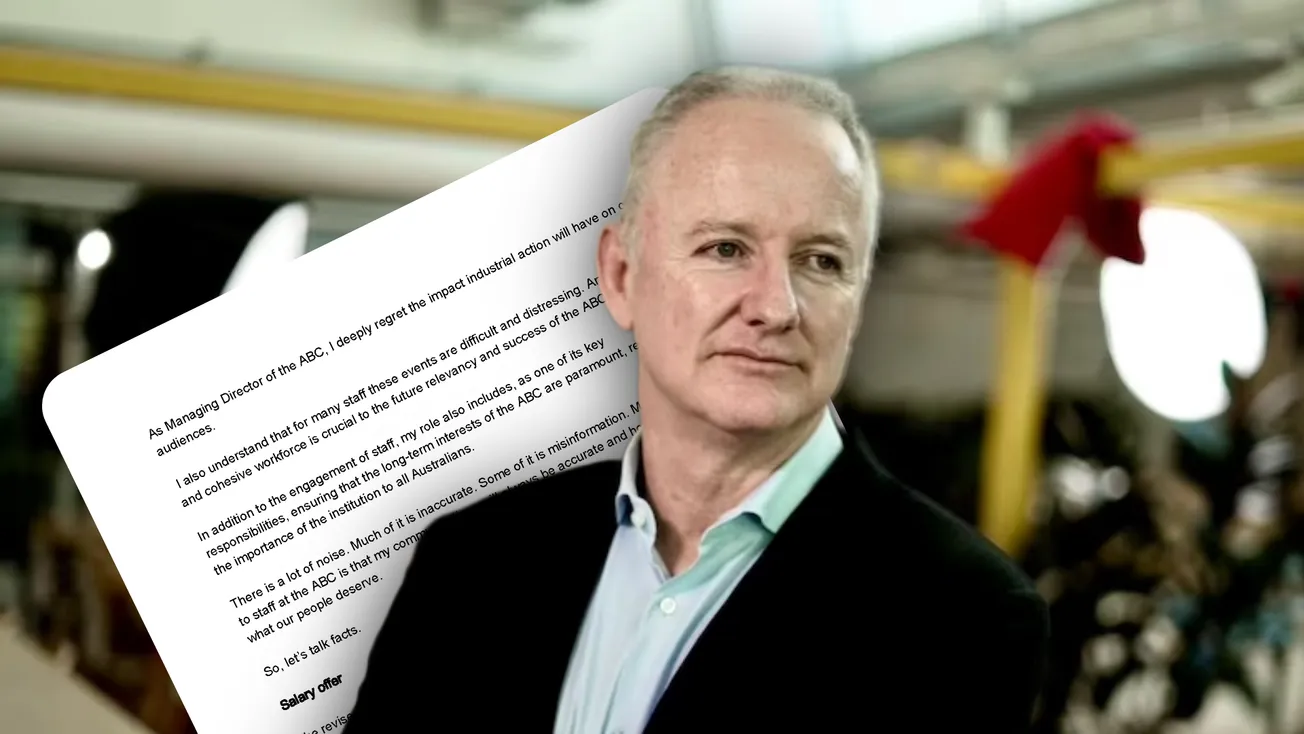

Just two days after ABC News boss Justin Stevens emailed all staff to tell them they were being forced to retain potentially sensitive information, including encrypted and timed-to-delete messages, he had to issue a clarification.
A follow-up email was sent both to reassure his journalists, some of whom were distressed that the ABC might not protect their sources, and also to provide information to the media reporting on the issue, including Lamestream.
The messy back-and-forth, which has still left ABC journalists confused about whether management will protect them and their sources, was sparked by the Royal Commission into Anti-Semitism, which two weeks ago sent a freeze order to public institutions, informing them of their obligation to retain documents relevant to its investigations.
The ABC and SBS, as public broadcasters, are required to comply but face entirely different ethical questions than other public bodies, such as the Department of Education or arts funding bodies.
The biggest of these, indeed the central ethical question in journalism, is the protection of confidential sources. And the stakes are real, not academic.
The ABC has interviewed people like Nicola Gobbo, the renowned mob lawyer turned police informant against her own clients. At the time, she was living overseas under a fake identity for fear of retribution from both the mob figures she put away and the Victorian police who used her in their unlawful scheme. Just last week, Four Corners interviewed a former ASIO agent, speaking out against Australia’s spymasters and the radical extremists he surveilled. He was also in hiding and ASIO has threatened "further action" against the ABC.
There are countless examples where a source’s life or safety can be in very real danger if they are not protected, and the commitment to protect them is the only way journalists can expose some of the biggest secrets in our country.
There is no doubt that every individual investigative reporter at the ABC would willingly face the ultimate repercussion for source protection: disobeying a legal order to produce documents could see a journalist risking a contempt charge and possibly jail time.
But management are a different story. Especially since the ABC has no obligation to protect sources in its written policies anymore. That promise was quietly erased from ABC policy over 15 years ago.
And as with many stories in journalism, the blame can be laid at the feet of Canberra press gallery journos out to dinner one fateful night.
What does the Royal Commission want?
On Friday 6 February, Stevens notified all ABC news staff in an email they had to comply with a freeze order from the Royal Commission. The freeze order is broad both in the types of information and communication that must be retained, and the subjects that are covered.