
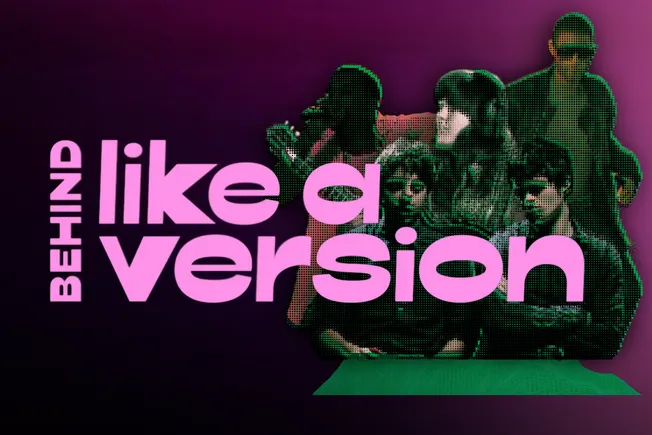
In 2013, Australian indie legend Courtney Barnett covered Kanye West’s Black Skinhead for Triple J’s Like A Version.
Despite the fact that Barnett is one of Australia’s most critically acclaimed contemporary musicians, the cover no longer exists on Triple J’s YouTube page, though a bootlegged copy can be viewed here. That’s because Barnett ended up disavowing the song, calling it a “misjudgement” soon after it was released and admitting she did it “without considering the wider context of the lyrics.”
She made those comments in response to the significant backlash she received after releasing the cover, including accusations it was racist.
Barnett was at least vaguely aware of some of the song’s lyrical context, infamously changing a racial reference to “Coon cheese”, an Australian cheddar brand that itself was renamed after the Black Lives Matter protests, and switching references from “bitches” to “chickens”.
The problem for Barnett was that Black Skinhead isn’t an anodyne or laconic track with a couple of explicit references that could be tweaked. It’s a raw and brutal look at the state of race-relations in the US, told explicitly from the perspective of a Black man. Kanye wasn’t being particularly subtle about the song’s thematic content either, the track was originally stylised as BLKKK SKKKN HEAD. The opening verse references Malcolm X, Michael Jackson, LeBron James, and features the world “Black” eight times.
Barnett’s rendition landed at a time when Australia’s music media ecosystem was much more robust than it is now (by that I mean, it actually existed), and it sparked an enormous amount of debate about the merits of a white indie artist choosing to cover a song that functions as a kind of Black power manifesto, which is what lead to Barnett describing the cover as misjudgement.
A month after it was released, Sydney hip-hop duo Horrorshow referenced the controversy on their own Like A Version when they covered Lou Reed’s Walk on the Wild Side, rapping, “I might vomit if I see another ironic cover of some hip hop that’s iconic.
"You see rap ain’t a fashion trend, happening thing for you to just be tapping in,
I’m really happy for you and I’mma let you finish,
But just don’t let it happen again.”
Horrorshow’s criticism was closer to the point than the accusation that Barnett was a racist for covering Kanye West. The issue was less about Barnett and Kanye individually and more about the respective values ascribed to different aesthetics and genres based on their history, social context, and fan bases. Barnett, as a white indie rock artist, had become another example of the trend of white indie rock artists doing ironic covers of hip-hop songs stretching back to Ben Fold’s 2005 rendition of Dr Dre’s Bitches Ain’t Shit.
It was a trend that frustrated hip-hop fans because it implied that their preferred genre wasn’t seen as serious or credible until a white rock artist decided to do their own tongue-in-cheek version.
Throughout the history of modern music, rock has generally been considered the most serious genre and the most worthy of thoughtful criticism. When it was pitted against hip-hop in the 80s and 90s, it was hard to avoid the racial dynamics at play: A genre overwhelmingly made up of white artists and white fans was elevated critically and commercially against a genre overwhelmingly made up of Black artists and fans.
In the 2000s and 2010s, a similar dynamic between rock and pop emerged, though this time the fault line was gender. It wasn’t until the 2010s that Pitchfork even started reviewing pop music, and although Ryan Adams’ 2015 track-by-track cover of Taylor Swift’s 1989 was more earnest than ironic, it’s still a reminder of an era where a female pop artist (even one as big as Taylor Swift) would be seen as receiving a credibility boost after being covered by a male rock musician.
When it comes to an Australian rock artist like Courtney Barnett and a Black genre like hip-hop, there’s something else at play too – the extremely poor level of racial discourse in this country, coupled with the fact that our most successful artists tend to come from an extremely narrow segment of the population, a segment that is both overwhelmingly white and generally wealthy.
That means the most famous artists we produce don’t have a lot of familiarity with musical styles that have historically emerged from marginalised communities, and as a result, their attempts to engage with those genres can end up as cringe, embarrassing or both.
This brings us to Melbourne post-punk band Radio Free Alice’s recent cover of Usher’s DJ Got Us Falling In Love and their interview about it, which has generated the most heated backlash to a Like A Version since Courtney Barnett 13 years ago.
Clips from the interview spread around the world, were parodied dozens of times, and attracted tens of thousands of comments, before Triple J deleted the original clip from all its social media accounts.
This story is for Lamestream subscribers
Lamestream is an independent media outlet. We're backed by our readers, not billionaires. Become a subscriber and get access to:
- Every story and exclusive, plus our archive
- Ad-free episodes of the podcast every Monday and Thursday
- Our weekly newsletter
- Pre-sale tickets to our live events, and discounts
- Our Discord community, and much more!
Already a subscriber? Sign in